
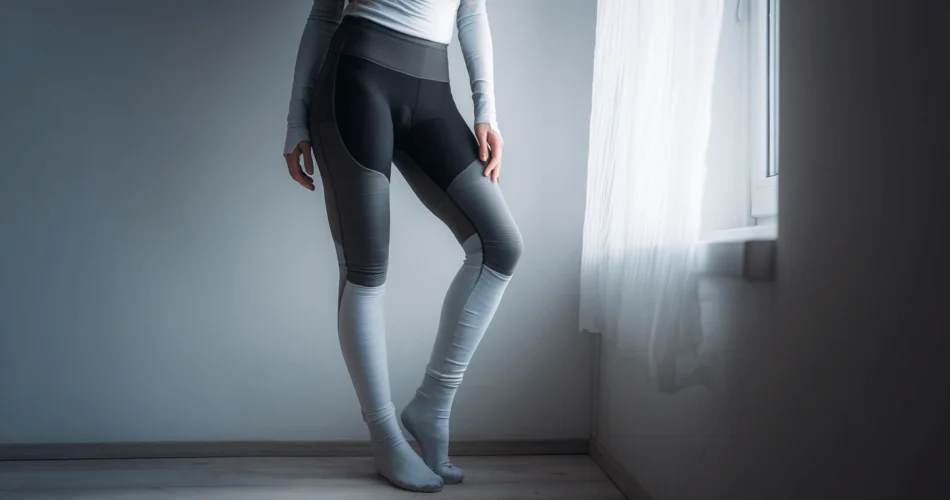
Getting ready to hit the slopes? While your awesome outer pants—your shell or insulated snow pants—get all the glory, the secret to staying comfortable, dry, and shredding all day long lies right beneath them. Choosing the wrong inner layers can turn an epic day into a miserable, cold, and damp experience.
When dressing for cold-weather action, we use a layering system, and everything starts with the base layer—the clothing right next to your skin. This layer is the foundation of performance, dedicated to managing moisture and regulating your temperature.
Let’s dive into how to choose the perfect gear to wear under your snowboard pants!
Related Articles
How to Wash Snowboard Pants
What to Wear Under a Snowboard Jacket
How to Wash Snowboard Jacket
The Non-Negotiable Rule: Cotton Kills
Before you reach for those comfy cotton sweatpants or a favorite old cotton t-shirt, stop right there. This is the single most important rule: Avoid cotton completely.
Cotton is inherently hydrophilic, meaning it loves water and absorbs moisture like a sponge, whether that moisture comes from perspiration or melting snow. Once cotton gets wet, it holds that moisture against your skin, creating a damp, cold environment. When saturated, cotton loses its insulating capacity entirely, actively drawing heat away from your body, which can cause a sudden and severe drop in core temperature.
Your base layer must be made of technical, moisture-wicking material.
The Base Layer Battle: Merino Wool vs. Synthetic
Once you’ve ditched the cotton, you’re left with two excellent—but different—paths to performance: Merino wool and synthetic fabrics.
Merino Wool: Natural Comfort and Odor Control
Merino wool is a natural fiber prized for its breathability, insulation, and excellent temperature regulation.
- Natural Comfort: It’s soft, non-itchy, and generally feels great next to the skin.
- Temperature Regulation: Merino is fantastic for stop-start activities (like hiking up a slope and then riding) because it adapts to your body temp, keeping you warm when it’s cold and cool when you’re active.
- Odour Resistance: This is the big win! Merino has natural antimicrobial properties and traps odors inside the fibers, meaning you can wear the same base layer for multi-day adventures without becoming “that stinky person”.
- Warmth When Wet: It retains some insulation even if it gets damp.
Best for: Multi-day trips, variable conditions, sensitive skin, and comfort seekers.
Synthetic Fabrics: Speed and Durability
Synthetic base layers, typically made from polyester or nylon, are engineered for high-output, high-intensity activities.
- Superior Wicking: Synthetics are hydrophobic (they repel water), making them incredibly effective at moving sweat away from your skin the fastest.
- Quick Drying: They dry much quicker than wool, often returning to dry comfort in minutes.
- Durability and Care: Synthetics are highly durable, resisting snags, pilling, and tears, and they are easier to wash frequently—you can usually just machine wash and dry them.
- Value: They are generally less expensive than Merino wool.
Best for: High-intensity days (where you sweat buckets), frequent washing, and budget-conscious choices.
Table 1: Base Layer Material Comparison
| Attribute | Merino Wool | Synthetic (Polyester/Nylon) |
| Primary Advantage | Temperature Buffering, Odor Resistance | Quick Drying, Durability, Affordability |
| Drying Speed | Moderate | Very Fast |
| Odor Resistance | Excellent (Natural) | Needs Chemical Treatment |
| Durability | Less resistant to wear/tear | Highly durable |
| Cost | Higher | Lower to Moderate |
Pro Tip: Can’t choose? Blended fabrics (like Merino/synthetic blends) offer the best of both worlds, balancing Merino’s comfort and odor control with synthetics’ durability and quick-drying speed.
The Fit and Weight Matrix
The Importance of a Snug Fit
The base layer must be worn directly against your skin. It should be snug-fitting, but never restrictive or uncomfortable.
Why snug? The process of wicking (moving moisture) relies on capillary action, which requires continuous contact between the fabric and your skin. If your base layer is baggy, that reduced contact significantly lowers wicking rates, compromises moisture management, and allows warm air to escape.
Choosing the Right Weight (GSM)
Base layers come in different thicknesses, usually measured by grams per square meter (GSM). Choose the weight based on the expected temperature and how hard you plan to ride.
| Weight Category (GSM) | Recommended Use | Activity Level | Rationale |
| Lightweight (150gsm) | Warm/Spring weather or high-output days | High Exertion (Hiking, splitboarding) | Maximizes breathability and rapid moisture removal to prevent overheating. |
| Midweight (200gsm) | Versatile choice for average resort riding | Moderate Activity | Balances insulation and wicking for variable conditions. |
| Heavyweight (250gsm+) | Frigid conditions (Below $20^\circ\text{F}$) | Low Activity/Extreme Cold | Provides maximum thermal mass and insulation. |
The Expert Trick: Go 3/4 Length Bottoms
This is where the gear nerds get excited. If you are serious about comfort in your snowboard boots, avoid full-length thermal leggings!
Snowboard boots have high cuffs that lace up tight. When you wear a full-length base layer, the extra fabric gets stuffed and compressed down into the boot around your lower calf, shin, and ankle. This inevitable bunching creates painful pressure points, can restrict circulation, and leads to chafing and hot spots throughout the day.
The solution? 3/4 length base layer bottoms (often called knickers or shants).
These specialized bottoms are designed to end around your mid-shin, positioning the hem naturally above the top of your snowboard boot. This ensures a seamless, clean fit inside the boot, where only your specialized snow sock and the boot liner interact. This simple design choice is a game-changer for sustained comfort and preventing friction.
The Performance Upgrade: Compression Base Layers
For riders focused on endurance, muscle support, or injury prevention, consider compression tights as your base layer.
Compression pants apply graduated pressure to the muscles, arteries, and veins. This targeted pressure enhances blood circulation, improving oxygen delivery to active muscles, while also efficiently removing metabolic waste products like lactic acid.
Compression Benefits:
- Reduced Fatigue: Provides stability by reducing muscle oscillation and vibration, letting you ride longer.
- Faster Recovery: Aids recovery after you get off the mountain by promoting the removal of lactic acid.
- Joint Support: Some compression gear, like that featuring technology similar to CW-X’s EXO-WEB™ or Bracelayer’s support layers, provides built-in exoskeletal support to key areas like the hips and knee joints.
- Convenience: Compression leggings designed for skiing often eliminate the need for bulky knee braces or knee sleeves, providing support without restricting movement or bunching uncomfortably under pants.
Adding the Mid-Layer (When Needed)
The mid-layer provides insulation and sits between your base layer and your outer snowboard pants.
Whether you need a mid-layer on your legs depends entirely on your outer pants:
- If your snowboard pants are insulated: You probably won’t need a mid-layer, as adding one might cause you to overheat and sweat excessively.
- If your snowboard pants are a thin shell: A mid-layer becomes essential for thermal defense.
Good lower body mid-layers include fleece pants or lightweight pants with synthetic insulation, chosen to be warm, breathable, and not bulky.
Conclusion: Stay Dry, Stay Warm
Layering under your snowboard pants is a system engineering problem—and getting the base layer right is the number one priority.
To recap your success strategy:
- NO COTTON. Ever.
- Choose Merino for comfort/multi-day use, or Synthetic for high-intensity/quick-drying performance.
- Ensure a snug fit for optimal moisture wicking.
- Invest in 3/4 length bottoms to eliminate bunching in your boots.
- Match the weight (light/mid/heavy) to the temperature and your activity level.
Follow these rules, and you’ll ensure your legs stay dry, warm, and ready to carve turns all day long!
Shop the Gear and Learn More
Ready to build your ultimate layering system? Check out these base layer options and guides from the brands mentioned in this post.
| Product/Category | Where to Explore (Based on Source Information) |
| Merino & Synthetic Base Layers | Find styles like Kepler Merino wool base layers or Vayper synthetic base layers and check out the full range available from Alpkit’s Member Rewards. |
| Merino Base Layers/Leggings | Explore options like Kepler Leggings from Alpkit or pure Merino wool base layers from Merino Protect. |
| Compression Tights for Skiing | Check out winter compression leggings and tights featuring CW-X EXO-WEB™ Technology designed for skiing/base layer use. |
| Knee Support Compression Layers | Find compression base layers with built-in knee support and thermal options from Bracelayer. |
| 3/4 Length Base Layer Bottoms | Look for 3/4 length base layers (shants/knickers) designed specifically for ski/snowboarding boots from LÉ BENT and thermal 3/4 base layers from Arctic Eco-Sno. |
| Layering Guides | Read more about how to layer effectively for winter sports from Quiksilver, Spyder, or the full guide on thermal management. |