
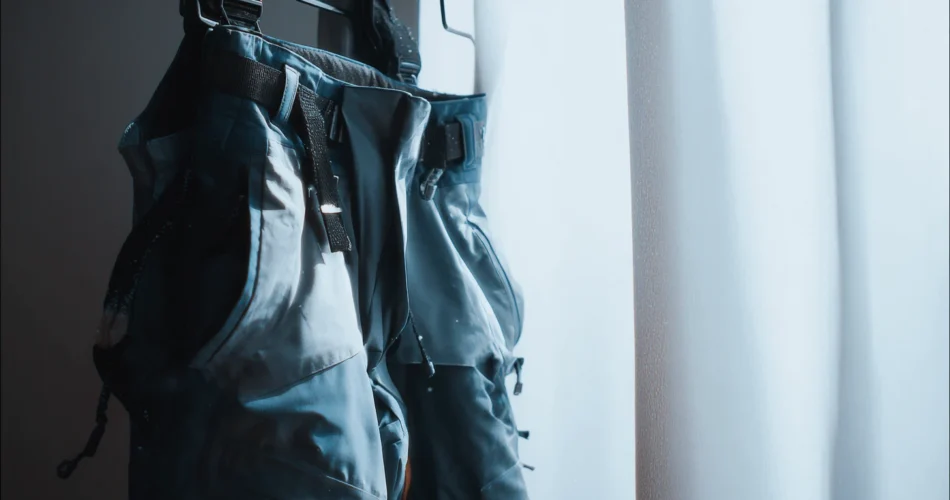
You invested good money in those technical ski pants—you know, the ones that keep you perfectly dry when you’re carving fresh powder or sitting on a wet chairlift! But over time, the performance starts to drop off, and you might notice water soaking into the fabric instead of beading up and rolling off. This happens because dirt, sweat, and body oils build up, blocking the fabric’s ability to repel water and breathe efficiently.
The good news? Washing your ski pants is actually necessary to restore their performance, not ruin them! By following a simple maintenance protocol, you can ensure your gear stays in peak condition season after season.
Related Articles
How to Wash Your Ski Jacket
What to Wear Under Ski Pants
How to Wash Snowboard Pants
Why Your Ski Pants Need a Spa Day (The Science of DWR)
The key to your pants’ performance is the Durable Water Repellent (DWR) coating on the exterior fabric. DWR is a finishing that lowers the surface tension of the fabric, causing water to bead up into tight, round droplets and run off.
When dirt, grime, and oils build up, they compromise this DWR layer, causing the fabric to absorb water—a condition known as “wetting out“. When the outer fabric gets saturated, it dramatically reduces the garment’s breathability, sometimes by up to 70%, making you feel clammy and damp inside. Regular cleaning revitalizes the DWR, clears the membrane pores, and restores the waterproof capabilities of your gear.
Step 1: Prep Work—Reading the Label and Securing the Gear
Before doing anything, you need to check the care instructions on your garment’s manufacturer tag. The label provides fabric-specific instructions that are essential, especially since some GORE-TEX pants might be dry-clean only.
Your Pre-Wash Checklist
Before placing your ski pants in the machine, take these critical steps to prevent damage:
- Empty the Pockets: Remove everything from the pockets, including any ski passes or small items.
- Close Everything: Secure all closures, including zippers, buttons, Velcro straps, snaps, and leg vents. Fastening Velcro is especially important because it can snag and damage the delicate face fabrics of your pants.
- Turn it Inside Out: This is a crucial step! Turning the pants inside out protects the DWR-treated outer surface from abrasion against the washing machine drum during the cycle.
- Spot Clean Heavy Stains: If you have heavy mud or grease, gently remove loose dirt with a soft brush. For remaining stains, you can pre-treat them using a small amount of the same technical gear cleaner you’ll use in the main wash, but never use standard store-bought stain removers as they can strip water-repellent treatments.
Step 2: The Wash—Use the Right Detergent!
This is where standard laundry rules go out the window. Using household detergents, fabric softeners, or bleach on technical outerwear is the number one enemy of performance gear.
Why You MUST Skip Regular Detergent
Standard liquid or powder detergents, and especially fabric softeners, leave behind hydrophilic residues that chemically bond to the fabric. This residue neutralizes the DWR coating, causing the fabric to “wet out” immediately.
| Item to AVOID | Why? |
| Powder Detergents | Can leave undissolved particles that physically clog the breathable membrane pores. |
| Liquid Detergents (Household) | Leave hydrophilic residues (surfactants) that mask DWR and attract water. |
| Fabric Softeners | Leave cationic polymer residues that destroy the hydrophobic effect of DWR. |
| Bleach/Stain Removers | Can damage the fabric, reduce waterproof effectiveness, and compromise color. |
Choosing the Right Cleaner and Settings
The only acceptable choice is an additive-free technical outerwear wash like Nikwax Tech Wash or Grangers Performance Wash (You can purchase these technical washes online or at specialty outdoor retailers). These specialized cleaners are designed to remove contaminants safely and revitalize DWR and breathability.
Washing Protocol
- Machine Check: Clean out your washing machine’s detergent dispenser to ensure no residual standard detergent or softener remains.
- Separate the Load: Wash technical pants separately from heavily soiled items and limit the load to one or two garments.
- Use Technical Wash: Add the required amount of technical wash (e.g., about 3 fl oz or 100ml for a front loader).
- Settings: Select a cold or warm cycle (maximum 105°F / 40°C) on a gentle, permanent press, or delicate setting.
- Rinse Twice: Use an extra rinse cycle to guarantee all cleaning agents are completely removed. This step is non-negotiable for peak performance.
- Minimize Spin: Minimize the final spin cycle (400 rpm or lower) to reduce mechanical stress on the seams.
Step 3: Drying & DWR Reactivation (The Performance Boost)
The drying stage is actually a thermal treatment designed to restore the factory DWR finish.
Reactivating Existing DWR
Your initial move should be to reactivate the existing DWR using heat. This heat helps the DWR polymer chains—which have become matted down—reorient and stand upright again, restoring water beading.
Option 1: Tumble Dry (Recommended)
- Tumble dry your pants on a low heat setting (warm, gentle cycle).
- Once dry, tumble dry for an additional 20 to 30 minutes to reactivate the DWR.
Option 2: Ironing (If No Dryer)
- If you cannot tumble dry, or if the care label restricts it, you can reactivate the DWR using an iron.
- Set the iron to a gentle or low heat setting (often indicated by one dot on the iron symbol).
- CRITICAL: Place a thin towel or cloth between the iron and the garment to prevent scorching.
- Do not use steam during this process.
Step 4: Reproofing—When to Reapply DWR
After washing and heat-treating, sprinkle water on the fabric to test it. If the water beads up and rolls off easily, your DWR is restored. If the water spreads out and soaks into the fabric, creating a dark, wet spot, it is time to chemically reapply a new DWR coating.
Choosing a DWR Reapplication Method
DWR reapplication products come in two main types, available as pump-sprays or wash-in products.
| Feature | Wash-In Treatments (e.g., Nikwax TX.Direct Wash-In) | Spray-On Treatments (e.g., Nikwax TX.Direct Spray-On) |
| Coverage | Full coverage, penetrating seams, zippers, and cords. | Targeted, focused on specific high-wear spots. |
| Internal Effect | Can potentially coat internal wicking liners. | Minimal internal effect (only outer shell treated). |
| Application | Less time-consuming (added to the wash cycle). | Requires manual, careful application. |
| Best For | Older garments or heavily used shells without wicking liners. | Garments with internal wicking liners, or quick touch-ups on high-wear areas like knees. |
How to Apply DWR Treatment
Liquid Wash-In Treatment:
- Read the product directions to determine the necessary amount for your load.
- Pour the specified amount into your washing machine drawer.
- Wash your clothing according to the garment care instructions.
- Tumble or line dry as instructed on the care label.
Spray-On Treatment:
- Wash your item first, but you don’t need to wait for it to dry before applying the spray.
- Fasten all closures and lay the garment flat.
- Spray the coating evenly across the outer surface.
- Gently rub the product into the fabric with a clean cloth or sponge to ensure maximum bond.
- Allow your GORE-TEX clothing to air dry, or follow the product instructions for heat activation (tumble dry or ironing) to cure the new coating.
Bonus Care: Special Materials and Frequency
GORE-TEX and Technical Apparel
GORE-TEX fabric is known for its durability, but care is essential.
- If your item is machine washable, use a small amount of liquid detergent and cold water, avoiding fabric softeners or bleach.
- A cold and gentle cycle is typically best.
- For handwashing, use a mild detergent and lukewarm water.
Down-Insulated Ski Pants
If your ski pants contain down insulation, follow these specific steps to maintain loft:
- Washing: Use a down-specific detergent and a gentle, cold cycle. It is important to include an extra rinse cycle to ensure all detergent residue is completely rinsed out, as leftover cleaner causes down to clump.
- Drying: Tumble dry down items on a low and gentle setting. Crucially, add two or three clean tennis balls or wool dryer balls to the dryer. These balls provide the necessary agitation to physically break up and evenly fluff the wet down, restoring its insulating properties.
How Often Should You Wash Ski Outerwear?
While base layers need washing after every use due to sweat and oil, outerwear needs less frequent care.
| Item | Recommended Wash Frequency |
| Ski Pants/Outerwear | Every 5–8 uses, or when visibly soiled. |
| GORE-TEX Gear | Wash regularly to prevent sweat, dirt, and oils from reducing breathability. |
| General Rule | If water no longer beads on the surface (wetting out), it is time to clean and reactivate DWR. |
Conclusion: Keep Your Gear Dry, Keep Your Fun Going!
Maintaining your high-performance ski pants isn’t rocket science, but it does require skipping those familiar laundry habits. By sticking to technical cleaners like Nikwax Tech Wash (available for purchase at outdoor gear stores) and always using low heat to reactivate your DWR, you ensure that your pants remain a reliable shield against the cold and wet elements.
A little bit of care ensures your expensive gear continues to protect you and breathe as designed, maximizing your comfort on the mountain. For long-term storage, always clean your pants first and store them loosely in a cool, dry place to maintain the loft and prevent DWR degradation. It’s a small effort for seasons of dry adventures ahead!