
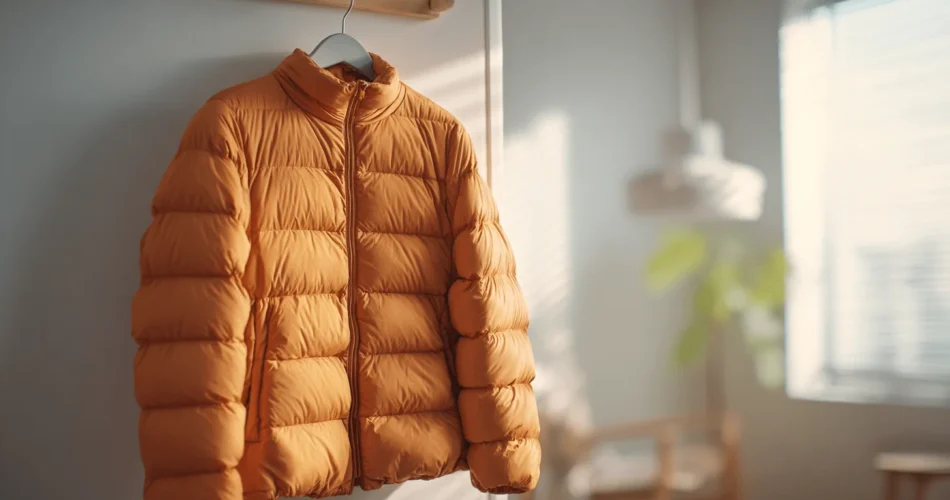
You finally washed your favorite puffy jacket, following all the tricky steps with the specialty detergent, only to pull it out of the washing machine looking flat, sad, and clumped—far from its former cozy glory. Don’t panic! That heavy, compressed look is totally normal when down insulation gets wet.
Down works by trapping air within its fluffy clusters, which creates that incredible lightweight warmth. When saturated, those clusters collapse and stick together, which is why your jacket feels heavy and dense. But with the right technique, you can restore its loft, fluffiness, and warmth.
The successful drying protocol hinges on three critical pillars: low heat, mechanical agitation, and manual intervention. Here is your comprehensive, step-by-step guide to drying a down jacket right.
Related Articles
How to Wash a Goose Down Jacket
How to Wash a Waterproof Jacket
What Is a Softshell Jacket?
1. Before You Dry: Essential Prep Steps
The drying process starts the moment the wash cycle ends. Handling the wet jacket gently is key to protecting the delicate internal stitching, known as baffles, which hold the down in place.
- No Wringing Allowed: Under no circumstances should you wring or twist the wet jacket. Twisting causes the saturated down to form tight clumps and can tear the internal baffles, leading to permanent cold spots.
- Remove Bulk Moisture Gently: A great way to remove excess water before heading to the dryer is the Towel Burrito Technique. Lay a clean, large towel flat, place the damp jacket on top, and slowly roll it up like a burrito, applying gentle, uniform pressure to press the water into the towel. If the towel gets too wet, replace it with a dry one.
- Check Zippers: Make sure all zippers, snaps, and Velcro tabs are closed before tumbling, as this prevents snags and damage to the shell fabric.
2. Tumble Dry Triumph: The Low-Heat, High-Agitation Protocol
Tumble drying is the superior method for restoring loft because it combines heat for moisture removal with mechanical action to break up clumps.
The Right Settings
The golden rule for down is low heat and patience.
| Setting | Recommendation | Why It Matters |
| Heat | LOW or NO HEAT (30°C to 60°C maximum). | High heat can scorch the synthetic shell fabric, melt technical coatings, and damage the delicate protein structure of the down feathers. |
| Duration | 2 to 4 hours total cumulative drying time. | Down is densely packed and retains moisture, requiring multiple cycles to dry completely. |
| Cycle Type | Use a manual time-dry setting. | AVOID automatic sensor-dry cycles; they often stop prematurely when the outer fabric feels dry, leaving dangerous moisture trapped inside the down clumps. |
The Secret Weapon: Agitation Tools
The introduction of physical agitators is mandatory to break up the dense, water-logged clumps and promote crucial air circulation. You’ll need three to four balls per cycle for effective results.
Tennis Balls vs. Wool Dryer Balls: The Showdown
Both options work well to provide the necessary “thumping” action to redistribute the down. However, wool dryer balls offer some benefits that make them the preferred default choice.
| Feature | Wool Dryer Balls (Recommended) | Clean Tennis Balls (Effective Alternative) |
| Material | 100% Natural Wool. | Felt exterior, hollow rubber core (synthetic). |
| Drying Time | Reduces drying time by absorbing moisture and increasing air circulation. | Increases airflow only. |
| Heat Use | Safe for all dryer settings. | Low heat only. High heat risks exposing the rubber core, leaving a chemical odor on fabric, or causing the rubber to crack. |
| Gentleness | Softer and gentler on fabrics. | Firmer, which can be better for fluffing pillows or outerwear, but may damage delicate fabrics if the felt is worn. |
| Longevity | Very durable, lasting around 1,000 loads (2-5 years). | Outer felt holds up, but rubber core may wear out or crack after about a year of repeated uses. |
| Noise | Quieter operation. | Firmer and create more noise/rattle while tumbling. |
Note on Expert Authors: Zach and Jerry Pozniak, owners of the luxury dry-cleaning company Jeeves New York and authors of The Laundry Book, specifically state that tennis balls work “especially well when drying down or feather-filled items like puffy jackets and pillows”.
3. The Manual Mission: Why You Must Interrupt the Dryer
This step is the absolute most critical part of restoring loft. If you leave the jacket in the dryer for four hours straight, the down may dry in a compressed, flat state, ruining the insulation.
- Stop Frequently: You must remove the jacket every 10 to 30 minutes during the drying process.
- Locate and Knead: Check the jacket, especially thick areas, and tactilely inspect every baffle for dense, heavy clumps. Using your fingers, gently massage, knead, and pull apart these down masses, focusing on breaking up “marble-sized” clumps. This separation allows the down to expand and speeds up the final evaporation of moisture.
- Shake it Out: Give the jacket a thorough, gentle shake in all directions before placing it back in the dryer. This redistributes the newly separated down clusters evenly throughout the baffles, helping to maximize volume and restore its fluffy shape.
- Repeat: Continue this cycle of tumbling, pausing, manual declumping, and fluffing until the jacket feels completely dry and lump-free.
4. The Air Dry Alternative
If you don’t have access to a dryer, or you prefer a gentler approach, air drying is possible, but it requires significantly more time and labor.
- Preparation: After pressing out excess water using the towel method, lay the jacket flat on a clean, dry towel. If the jacket is very lightweight, you can also hang it on a padded hanger.
- Location, Location, Location: Choose a cool, dry, and well-ventilated area, such as a laundry room.
- Avoid the Sun: Keep the jacket out of direct sunlight. UV rays can fade the fabric and weaken its fibers.
- Continuous Management: Because this method lacks mechanical agitation, you must manually knead, massage, shake, and flip the garment multiple times per day, ideally every few hours, for 2–3 days. If you skip this, the down will dry compressed, resulting in long-term loft failure.
5. Non-Negotiable: Achieving the “Bone-Dry” Standard
Verifying that your down jacket is 100% dry is not just about aesthetics; it is a structural necessity. If down stays damp, mold or mildew can grow, which degrades the down’s protein structure, causing a persistent musty odor and a permanent reduction in loft.
Final Inspection Criteria
- Lightness Check: The jacket should feel consistently light and exhibit maximum fluffiness across all sections. If any part feels dense, heavy, or cold to the touch, it still retains moisture and requires more drying time.
- Check High-Mass Areas: Pay specific attention to where moisture tends to linger longest: the collar, cuffs, pockets, and along internal seams.
- The Cheek Test (Pro Tip): To confirm a down item is fully dry, press it to your cheeks to gauge for residual moisture. If you are the slightest bit unsure, return it to the dryer for another low-heat cycle.
- The Final Airing: Even after a successful tumble dry, hang the garment on a coat hanger, unzipped, in a well-ventilated space for an additional 24 hours. This crucial safeguard eliminates any minute residual humidity clinging to the down clusters before storage.
Conclusion
Washing and drying a down jacket doesn’t have to be a source of anxiety. By committing to low-heat drying, consistently using agitation tools like tennis balls or wool dryer balls, and manually intervening every 10 to 30 minutes, you ensure the down clusters are fully separated and loft is completely restored.
Once your jacket is bone-dry and fluffy, remember the Compression Commandment for storage: Never store it compressed in a stuff sack for extended periods. Instead, keep it loosely hung on a padded hanger or loosely folded in a breathable bag in a cool, dry, well-ventilated area to maintain its performance for years to come.
Taking the time to dry your jacket properly means it will stay warm, cozy, and ready for your next winter adventure!
For Further Reading
For more expert advice on laundry and garment care, consider checking out The Laundry Book, authored by luxury dry-cleaning experts Zach and Jerry Pozniak.