
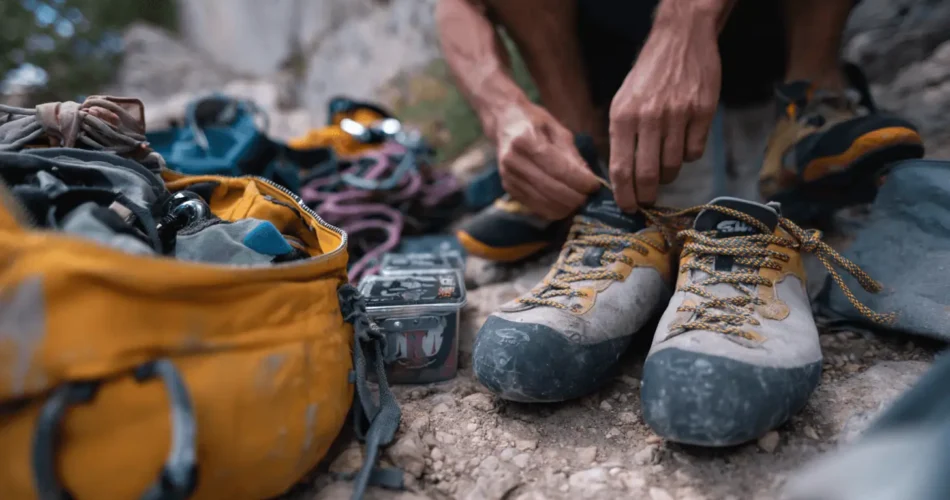
There are few things as exciting as unboxing a brand-new pair of rock climbing shoes. The rubber is sticky, the color is vibrant, and the promise of better footwork is right there in your hands. That excitement often fades the moment you try to cram your feet inside and realize they feel like unforgiving, rigid torture devices.
It’s a common dilemma: climbing shoes need to fit precisely—snug enough to eliminate “dead space” for optimal grip and precision—but they shouldn’t cause excruciating pain.
If your new kicks are giving you severe discomfort, don’t chuck them yet! While you can’t stretch the rigid rubber sole, you can modify the upper material to achieve a comfortable, customized fit. We’re talking about increasing the volume or width, not the fixed length.
Here are the best ways to transform those rigid newcomers into glove-like performance tools.
Related Articles
How to Clean Rock Climbing Shoes
How to Choose Climbing Pants
What to Wear Rock Climbing
Step 1: Get the Fit Right (Snug, Not Painful)
Before diving into aggressive stretching, let’s confirm you have the right starting point. A snug fit is desirable for optimal performance. Ideally, your toes should be right against the front of the shoe, perhaps gently curled, and the shoe should be snug all around to maximize control.
However, climbing shoes should never be painful. If your toes feel crushed, circulation is cut off, or you wince when you stand, the shoes are simply too small, and stretching may not solve the problem. The goal of stretching is to alleviate pressure points and gain volume, not force a grossly undersized shoe to fit.
Material Matters: Leather vs. Synthetic
How much your shoe will stretch depends entirely on the material used in the upper portion (the non-rubber fabric). Knowing your shoe material is essential for choosing the right stretching technique and sizing them correctly when you buy them.
Natural Leather Uppers
Leather is a fantastic material for customization because it is viscoelastic—it deforms and retains a new shape when exposed to heat and moisture (like foot sweat!).
- Unlined Leather: Offers the greatest stretch potential, often expanding 1 to 2 full sizes over its lifespan. Climbers often downsize these significantly, trusting they will mold to the foot over time.
- Lined Leather: The internal lining restricts stretching, resulting in less expansion, typically around half a size to one full size.
Synthetic Uppers
Synthetic materials (like specialized microfiber) are designed for rigidity and consistency.
- Synthetic Uppers: Stretch minimally, generally a maximum of up to half a size. The fit you get the day you buy them will be very similar to their fit throughout their life. If you choose synthetic, avoid aggressive downsizing.
| Material Type | Expected Stretch Magnitude | Molding Mechanism | Break-In Recommendation |
| Unlined Leather | 1 to 2 full sizes | Hydro-thermal (sweat/water) | Can be sized tighter; benefits highly from moisture/heat methods |
| Lined Leather | Up to 1/2 to 1 full size | Moderated hydro-thermal | Requires less aggressive downsizing than unlined leather |
| Synthetic | Up to 1/2 size (minimal) | Mechanical flexing | Must fit very snug right out of the box; heat/water yield minimal results |
Foundational Break-In Protocols (The Safest Route)
For most shoes that are sized correctly, the best way to break them in is gradually, using the natural warmth and pressure of your foot.
1. Passive Wear at Home
The simplest method involves wearing your shoes while seated and unweighted.
- Start with short sessions, aiming for about 15 minutes at a time.
- Gradually increase the duration as comfort improves.
- Avoid walking in them excessively, as this puts unnecessary stress on the rubber sole and can ruin the engineered camber (shape) of performance shoes.
- Significant comfort improvement should be noticeable within 3 to 5 nights of dedicated seated wear.
2. Active Dynamic Molding (Go Climb!)
The single most effective way to mold your shoes to your feet is by actually climbing in them.
- Begin on low-difficulty routes or boulder problems.
- The movements (bending, twisting, smearing) flex the stiff materials and warm up the foot.
- Crucial Tip: Take your shoes off between climbs or routes to let your feet rest and breathe. The repeated action of taking them on and off helps force the material to mold quicker.
3. The Plastic Bag Trick
If your shoes are too tight to slip on easily, this trick reduces friction and makes the break-in process more tolerable.
- Place a thin plastic bag (like a grocery bag or Saran wrap) over your entire foot or just around your heel before attempting to put the shoe on.
- The plastic acts as a barrier, allowing your foot to slide into the tight shoe more easily. This is especially helpful in preventing chaffing and blisters on the toes and Achilles tendon during the initial rigid phase.
Advanced Volumetric Modification (For a Faster Stretch)
If passive methods aren’t enough, you can accelerate the stretching process, though these methods carry certain risks to the shoe’s structure and should be used cautiously.
The Cryogenic (Freezer) Method
This technique works for both leather and synthetic shoes and is excellent for achieving a generalized width or volume increase. It uses the fact that water expands by about 9% when it freezes.
- Fill two durable, zipper-seal plastic bags (gallon-sized bags work well) with enough water to approximate the volume of your foot inside the shoe.
- Seal the bags tightly, removing excess air.
- Insert the water-filled bags deeply into the toe box of your shoes.
- Place the shoes in the freezer for at least 8 hours (or overnight) to allow the water to freeze and expand the upper material.
- Remove the shoes and let the bags thaw for at least 30 minutes before carefully wiggling them out.
- Allow the shoes to fully thaw before trying them on.
The Hydro-Thermal Soak (Water Method)
This method is primarily effective for leather shoes because moisture softens the leather fibers, making them pliable for a major stretch.
- Put on a pair of socks (thicker socks create more space and maximize stretch) and slide on your new shoes, lacing them up.
- Turn the shower or faucet on warm (avoid scalding hot water) and soak your feet and shoes completely for about 1 to 5 minutes. Wiggle your toes and move your feet to initiate the stretching.
- Keep the wet shoes on and walk around carefully for 10 to 30 minutes. This molds the material to your feet under pressure.
- If permitted, climbing in the damp shoes is the best way to set the customized fit.
- Remove the shoes and immediately stuff them tightly with newspaper, paper towels, or socks to hold the new shape.
- Air dry slowly for 24–48 hours until completely dry.
🚨 WARNING: Post-Soak Drying is Critical Do NOT use heat (like a radiator, dryer, or prolonged sunlight) to speed up drying. High heat will cause the leather to shrink back up and can compromise the heat-activated adhesives holding the sole and rand to the upper, leading to delamination (the shoe falling apart).
The Thermal Softening (Hair Dryer Method)
This technique is best for targeted, minor hotspot relief.
- Stuff your shoes tightly with socks.
- Use a hairdryer set to medium heat and hold it about 6 inches (15 cm) away, continuously moving it over the upper material for about 1 minute until the material is warm (“toasty,” not hot).
- While the shoes are still warm and pliable, immediately put them on your feet (wearing thick socks works best) and walk around until they cool completely. The material will set to your foot’s shape.
🛑 WARNING: Extreme Heat Damage Never use high heat settings or place your shoes in an oven. Excessive heat will degrade the rubber, causing it to lose its durability, and can melt the glue that holds the shoe together. Even careful use of a hairdryer has been shown to cause slight glue peeling.
Alternative Methods and Final Safety Checks
For very specific issues, specialized tools might help:
- Ball & Ring Stretchers: These cast metal devices are designed to apply focused pressure to a single spot on the upper material, perfect for relieving discomfort caused by bunions or corns.
- Chemical Loosening: For leather uppers, applying a mix of rubbing alcohol and water with a cotton ball or spray bottle can loosen the leather fibers, making the fabric more malleable. Wear the shoes until the alcohol dries quickly.
Crucial Warnings Before Modifying Shoes
| Action | Risk Summary |
| Attempting to Return the Shoes | You likely won’t be able to return shoes once you have tried to stretch them, as most stores won’t take back worn items. |
| Using Heat (Oven/Radiator) | Causes glue failure, rubber delamination, and shrinking of leather. |
| Leaving Stickers/Tags | If tags/stickers are left on, they may get stuck to the sole during stretching or use, creating a hazard that compromises grip while climbing. |
| Stretching Too Much | An overly comfortable shoe will often continue to relax quickly and lose the precision needed for edging and smearing, potentially turning them into an “expensive carpet slipper”. |
Patience Pays Off
Breaking in a new pair of climbing shoes requires patience and consistency. It typically takes 3 to 5 climbing sessions before shoes start feeling considerably more comfortable and begin molding to your specific foot shape.
Remember, while specialized techniques can speed up the break-in, the ultimate goal is achieving a precise fit that is snug but not restrictive. By listening to your feet and choosing a method that respects the materials of your shoes, you can ensure your footwear enhances your performance without compromising your long-term foot health.
Happy climbing! The sooner those shoes feel right, the sooner you can stop thinking about your feet and start focusing on the next move.
Stretching climbing shoes is much like tuning a guitar—you need the strings tight enough for performance, but not so tight that they snap. It’s a balance of tension and give to achieve perfect harmony.