
Ready to hit the slopes but tired of freezing, sweating, or dealing with bunchy, uncomfortable gear under your ski pants? You definitely know the discomfort and struggles of staying warm and comfortable inside those rigid ski boots.
What you wear directly against your skin—the base layer—is the secret weapon to having an epic day instead of a miserable one cut short by chills or dampness. It’s the foundation of a successful layering system designed to keep your body temperature regulated and moisture managed, no matter if you’re carving hard turns or sitting still on a freezing chairlift.
Let’s break down exactly what you should wear under your ski pants for peak performance and all-day comfort.
Related Articles
How to Wash Ski Pants
What to Wear Under a Ski Jacket
How Should a Ski Jacket Fit
The Absolute Golden Rule: Just Say NO to Cotton
Before we dive into the good stuff, let’s talk about the single most critical mistake you can make: wearing cotton.
Cotton might feel soft at home, but on the mountain, it quickly becomes your enemy. Cotton is highly absorptive and hydrophilic, meaning it soaks up moisture from your sweat or snow.
When cotton gets wet:
- It stays wet for a long time.
- It loses all its insulating power.
- It functions as a heat sink, enhancing evaporative cooling and facilitating significant heat loss, which massively increases the risk of hypothermia (“wet chill”).
- Wet cotton rubs against your skin, causing painful chafing and irritation.
For safety and comfort, always stick to performance fabrics like wool or synthetics.
The Core Layer: Thermal Bottoms (Base Layers)
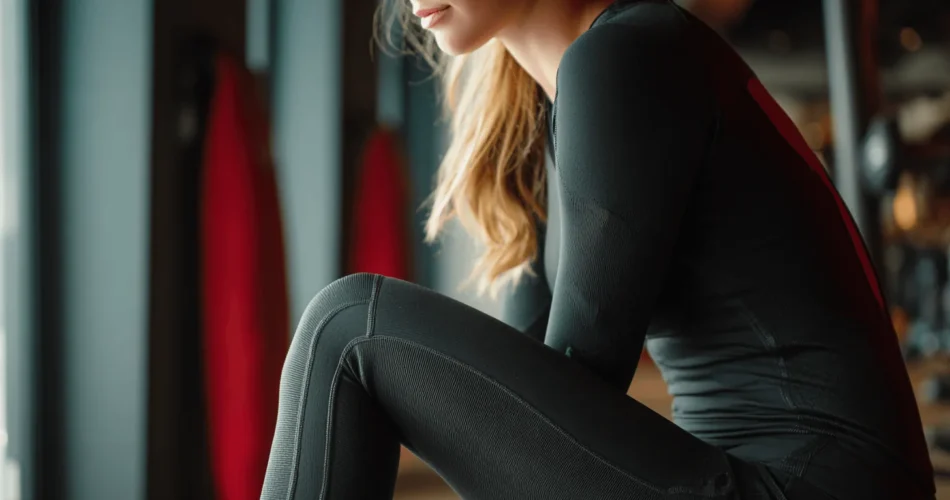
Your base layer bottoms, often called thermal tights or long johns, are essential for wicking sweat away from your skin and trapping heat close to your body. To work effectively, the layer must fit snugly against your skin, enabling optimal capillary action to pull sweat away. A comfortable, body-skimming fit is key—it should allow free movement but avoid being too loose, which hinders wicking.
The choice of material depends entirely on your activity level and whether you “run hot” or “run cold”.
Material Wars: Merino Wool vs. Synthetic
Base layers are primarily made from Merino wool, synthetics (like polyester and nylon), or blends of the two.
Merino Wool: The Natural Regulator
Merino wool is prized for its soft feel, excellent thermoregulation, and ability to resist odor naturally. It can keep you warm when temperatures drop and cool you down when you start sweating.
- Pros: Naturally odor-resistant (great for multi-day use), highly breathable, retains insulating properties even when damp, generally softest next to skin.
- Cons: Higher cost, less durable than synthetics, and tends to dry slightly slower.
High-Performance Synthetics (Polyester/Nylon)
Synthetic fibers are engineered for speed and durability. They are a preferred choice for high-intensity activities where sweat output is maximal.
- Pros: Highly durable, more affordable, and feature an exceptionally fast drying speed.
- Cons: Prone to retaining body odor (often mitigated with treatments like Polygiene), and may not feel as warm when static or wet compared to Merino.
Blends: The Best of Both Worlds
Many manufacturers combine Merino wool with synthetic fibers to enhance durability and speed up drying time while retaining the wool’s softness and odor control.
| Feature | Merino Wool | High-Performance Synthetics |
| Primary Strength | Odor resistance, insulation when damp | Quick-drying speed, durability, affordability |
| Drying Time | Slower | Very fast |
| Best For | Moderate activity, multi-day use, cold weather | High-intensity activities (touring, fast laps) |
| Cost | Generally higher | Generally lower |
Choosing the Right Thickness (GSM)
The warmth of your base layer is measured in Grams per Square Meter (GSM). Matching the GSM to your activity level and the expected temperature is essential for thermal regulation. Midweight is generally the most versatile choice for year-round and general use.
| GSM Range (Approx.) | Classification | Primary Use Case | Activity/Conditions |
| 120–180 GSM | Lightweight/Microweight | Spring skiing, High-output activities, Milder temps | High activity (75°F – 45°F) or mild conditions |
| 180–250 GSM | Midweight | Standard resort skiing, general winter conditions | Moderate to high activity (60°F – 0°F) |
| 300–400 GSM | Heavyweight | Extreme cold, low activity (long chairlift rides) | Extreme cold (30°F – 0°F and below) |
The Length That Matters: Why Go 3/4?
This might seem weird if you’re new to snow sports, but for skiing and snowboarding, the 3/4 length base layer is highly recommended.
This specialized cut stops at the mid-calf or mid-shin, concluding specifically above the rigid upper cuff of your ski boot.
The functional advantage is massive:
- No Bunching or Lumps: Full-length thermals invariably bunch up inside the tight boot, creating pressure points.
- Prevents Chafing and Blisters: Eliminating the bulk where the boot is tight prevents chafing and irritation around the shin.
- Maintains Circulation: This length helps maintain proper blood flow to your feet and lower limbs.
Elevate your skiing by sticking to 3/4 length thermal bottoms to ensure comfortable, boot-friendly layering.
The Rest of the System: Socks and Underwear
The base layer system doesn’t stop at the thermal bottoms; your socks and undergarments play equally critical roles in moisture management.
1. Underwear
Just like your base layer, your underwear must be moisture-wicking. Avoid cotton entirely. Opt for materials like Merino wool, bamboo, or high-performance synthetics.
Some experts suggest choosing a longer cut, like a 6-inch boxer brief, for better coverage and prevention of chafing during vigorous activity.
2. Ski Socks: The Only Thing in Your Boot
Specialized ski socks are an often overlooked necessity. They are designed with targeted cushioning, support, and a snug fit to enhance blood flow and minimize fatigue inside the boot.
Here is the absolute rule regarding your socks and thermals: Your ski sock must be the only layer inside your boot.
You should put on your ski socks first, followed by your 3/4 length base layer pants, and finally your ski pants. Wearing socks over your base layer or having fabric bunched up cuts off circulation and leads to cold feet and discomfort.
Layering for Different Conditions (Shell vs. Insulated Pants)
Your outer ski pants determine how much insulation you need underneath. Ski pants generally come in two types: insulated and shell.
| Outerwear Type | Description & Primary Use | Lower Body Layering Strategy |
| Insulated Ski Pants | Have built-in synthetic or down warmth. Best for resort skiing, cold climates, or those who run cold. | Usually requires only a lightweight or midweight base layer for moisture management. |
| Shell Pants (Uninsulated) | Offer weather protection (wind/waterproof) but zero warmth. Best for backcountry touring, high exertion, or variable temperatures where layering flexibility is key. | Requires a midweight to heavyweight base layer for warmth, as the system relies entirely on the layers underneath. |
What About Mid-Layers for Legs?
Unlike your upper body, which often requires a fleece or puffy mid-layer, the lower body usually skips this step. Continuous leg movement generates substantial internal heat, reducing the need for static insulation.
A secondary mid-layer (like fleece pants) is typically only needed for extreme, sub-zero cold or for skiers who chronically run cold. Be cautious, as fleece pants can be bulky and may restrict your movement under the ski pants. For most cold-weather skiing, a high-quality, mid-to-heavyweight thermal base layer is enough.
Expert Recommendations & Where to Shop
Investing in quality base layers is an investment in your safety and comfort on the mountain that will last multiple seasons if cared for correctly.
Here are highly-rated base layer bottoms and brands mentioned in the sources, categorized by their material focus:
| Product Example | Material Focus | Key Performance Attribute | Purchase Retailers Cited |
| Smartwool Classic Thermal Merino Bottom | 100% Merino Wool (250 GSM) | Gold standard for softness, warmth, and odor resistance | Amazon, Backcountry, REI |
| Icebreaker 200 ZoneKnit Thermal Leggings | 100% Merino Wool (approx. 200 GSM) | Excellent temperature control and odor resistance | Amazon, REI |
| Merino.tech Bottoms | 100% Merino Wool (Midweight 250 GSM) | Budget-friendly Merino with warmth and odor-fighting properties | Amazon |
| Black Diamond Solution 150 Merino Bottoms | Merino/Synthetic Blend (Nuyarn) | Durability of synthetic with softness of wool; great mobility | Amazon |
| REI Co-op Midweight Base Layer Bottom | Recycled Synthetic Blend (220 GSM) | Excellent value, quick-drying speed, durable construction | REI |
| Patagonia Capilene Thermal Weight Bottoms | Recycled Polyester Synthetic | Impressively breathable, ideal for high-exertion activity | Backcountry, REI, Evo |
| Arc’teryx Rho Heavyweight Bottoms | Synthetic (Torrent Fleece) | Cozy warmth, soft fleece interior, high quality | Evo, Amazon, REI |
| Helly Hansen LIFA® Merino Bottom | Wool/Synthetic Blend (Dual Layer) | Designed to trap heat and keep you cozy in cold conditions | Helly Hansen, Amazon, Backcountry, Moosejaw (Not listed in sources) |
(Note: Products may also be available directly from the brand websites, such as Stio, Lé Bent, Minus33, etc.)
Conclusion: Layer Smart, Ski Happy
The base layer under your ski pants is arguably the most essential gear purchase you’ll make for the mountain. Getting this layer right—prioritizing performance fabrics, ensuring a snug fit, and selecting the specialized 3/4 length—is an investment that guarantees long-term safety and consistent comfort.
Stop worrying about chafing, cold, or discomfort, and focus instead on the thrill of the descent! The proper thermal bottoms will manage your moisture like a professional bodyguard, keeping you dry and warm from your first lift ride until your last run.
Ready to Gear Up?
Check out these related resources cited in the review to help finalize your kit:
- Long Underwear for Men & Women
- Best Base Layers (Tested and Rated)
- The Complete Guide to Outdoor Clothing: Layering Systems That Work
- Long Underwear in 2025 For a Warm Base Layer (Video Transcript)